
Motiviert ins neue Jahr gestartet und schnell gemerkt, dass Energie und Belastbarkeit fehlen? Nicht erst wenn man krank und chronisch müde (chronic fatigue) ist, sondern bereits dann, wenn der Alltag mehr abfordert als der Körper an Kräften regenerieren kann.
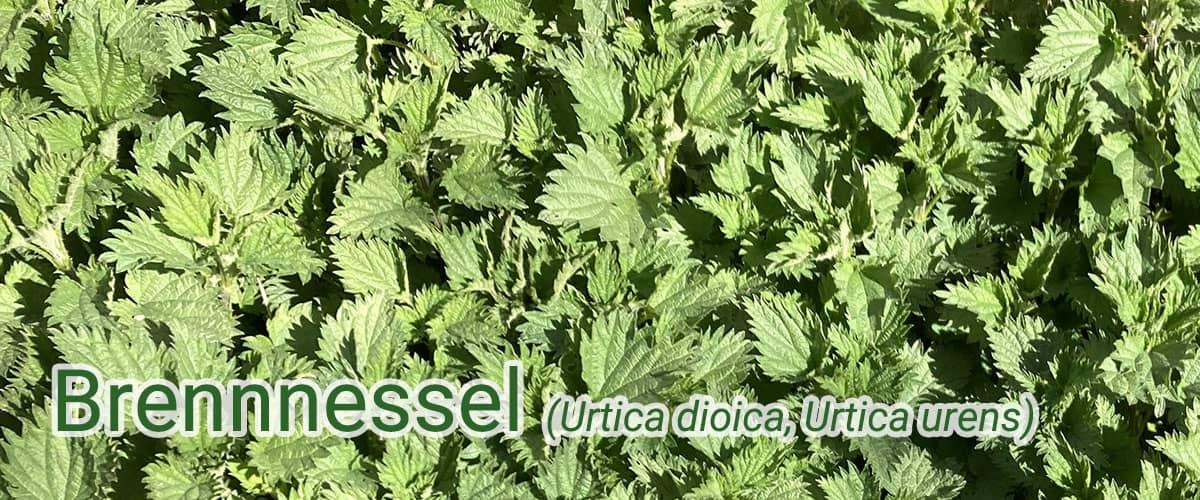
Frische Dynamik bringt eine bereits bei den Kelten verehrte Arzneipflanze: die Brennnessel.
Sie ist nachweislich kräftigend, entlastend, verringert Müdigkeit und Erschöpfung und fördert eine bessere Belastbarkeit und schnelle Regeneration:
Mehr Energie & Vitalität
Die Brennnessel wirkt nicht aufpeitschend wie Koffein, sondern baut stattdessen natürliche Ressourcen auf und verzögert Alterungsprozesse1: nachhaltig, ruhig, gleichmäßig.
Dafür sorgen pflanzeneigene natürliche Wirkstoffe wie Lektine, Kieselsäure, Polyphenole, Ursäure, Flavonoide, Quercetin, Vitamine, Mineralien und bioaktive sekundäre Phytostoffe.
Sie verbessert die Funktion der Mitochondrien: „In unserer Studie erhöhten die Brennnesselextrakte die FN-OXPHOS-Aktivität (…) Die FN-OXPHOS-Kapazität spiegelt die mitochondriale Atmungsfunktion (…) Unsere Daten sind die ersten, die die Bedeutung von mitochondrialen Atmungseffekten (…) der Brennnessel belegen.“2
Ihre natureigenen Wirkstoffe verbessern zudem den Eisenstoffwechsel, die Bildung roter Blutkörperchen und steigern den Sauerstofftransport im Körper. Sie erhöhen Leistungsfähigkeit und Vitalität, verringern Müdigkeit und Ermüdung und normalisieren die geistige Leistung, wie z.B. Merkfähigkeit und Konzentration.3-7
Stoffwechselentlastung
Wenn der Stoffwechsel von störenden Stoffen befreit wird, steht wieder mehr Energie zur Verfügung.
Die pflanzeneigenen Wirkstoffe Urtica dioica Agglutinin (UDA) und Wirkstoffe in den Brennnesselsamen (UDS) binden und neutralisieren Gifte: „Brennnesselblätter haben nicht nur eine eindeutige Schutzwirkung bei einer Quecksilbervergiftung gezeigt.“8, „Es wird der Schluss gezogen, dass UDS bei Ratten mit Aflatoxikose eine hepatoprotektive Wirkung hat.(…) Aflatoxine (AF) sind eine Gruppe von Mykotoxinen, die als Kontaminanten in einer Vielzahl von Lebens- und Futtermitteln vorkommen können. Sie werden als sekundäre Stoffwechselprodukte von den Pilzen Aspergillus flavus und Aspergillus parasiticus gebildet.“9. Auch Schäden durch Carbontetrachloride (CCl4) werden gemildert10, reizende Spike-Proteine des Corona-Virus neutralisiert11-12, Radikale, Schwermetalle und Stoffwechselschlacken reduziert und verschiedene Erreger eliminiert13-17.
„Die antihyperlipidämischen Eigenschaften der Brennnessel beruhen auf der Hemmung der HMG-CoA-Reduktase und der Verringerung der Lipidperoxidation durch antioxidative Wirkungen. Zudem ist Quercetin, eines der in der Brennnessel enthaltenen Flavonoide, für die Senkung des Gesamtcholesterinspiegels verantwortlich.“39
Das Elektrolytgleichgewicht wird reguliert, der Energiestoffwechsel und die Funktion des Immunsystems werden optimiert. Bereits 1,4 g täglich (4 Tabs) können Schmerzmittel und Antirheumatika um 50 % reduzieren, denn Brennnessel beruhigt Entzündungen, insbesondere bei rheumatischen Erkrankungen und Arthritis, und hemmt überschießende Immunreaktionen.18-30
Die Brennnessel normalisiert auch die Histaminproduktion. Bei 48% der Allergie- und Heuschnupfen-Patienten erwies sie sich wirksamer als eine chemische Medikation.31-32
Schnelle Regeneration
Brennnessel erhöht die Belastbarkeit, Stabilität und Regeneration selbst bereits überforderter Zellen und Gewebe. Sie fördert die Erneuerung angegriffener Gehirn-, Muskel-, Haut-, Bauchspeicheldrüsen- und Gewebezellen.33-39 „Die Brennnessel erwies sich als wirksames Antioxidans und mögliches antiapoptotisches Ergänzungsmittel, das das Überleben der Zellen im Gehirn fördert.“33 „Die Ergebnisse deuten darauf hin, dass UD (Urtica dioica) eine potenzielle antioxidative Wirkung auf ischämisches Muskelgewebe hat.“34 „Darüber hinaus entfaltet die Brennnessel antidiabetische Wirkungen durch Prozesse wie die Steigerung der Insulinsekretion und die Proliferation von β-Zellen der Bauchspeicheldrüse.“ 39
Starke Kraftpakete
Brennnessel Tabs aus der naturbelassenen Wildform, zusatzfrei mit dem wirkstofferhaltenden Sansalva®-Verfahren der Traditionellen Medizin hergestellt, sind leicht in die tägliche Routine integrierbar. 10 Tabs täglich bringen neuen Schwung.
Sie sind ohne Nebenwirkungen und mit allen Medikamenten problemlos kombinierbar. Auch bei ME/CFS (Myalgische Enzephalomyelitis / Chronisches Fatigue Syndrom), Burnout und anderen Erschöpfungssyndromen geeignet.
Literaturquellen:
- Bourgeois C, Leclerc EA, Corbin C, et al, Nettle (Urtica dioica L.) as a source of antioxidant and anti-aging phytochemicals for cosmetic applications, Comptes Rendus Chimie, Vol 19, Issue 9, 2016, P 1090-1100, ISSN 1631-0748
- Muceniece R, Revina BL, Kviesis J, Jansons A, Kopiks K, Jekabsons K, Saleniece K, Namniece J, Grigale-Sorocina Z, Jansone B. Nettle Leaf Water Extracts for Hepatoprotection: Insights into Bioactivity and Mitochondrial Function. Plants. 2025; 14(7):992.
- McClung JP, Karl JP, Cable SJ, et al, Randomized, double-blind, placebo-controlled trial of iron supplementation in female soldiers during military training: effects on iron status, physical performance, and mood, The American Journal of Clinical Nutrition, Vol 90, Issue 1, 2009, P 124-131, ISSN 0002-9165
- Lakhal-Littleton S, Robbins PA. The interplay between iron and oxygen homeostasis with a particular focus on the heart. J Appl Physiol (1985). 2017 Oct 1;123(4):967-973.
- Brutsaer TD, Hernandez-Cordero S, Rivera J, et al, Iron supplementation improves progressive fatigue resistance during dynamic knee extensor exercise in iron-depleted, nonanemic women, The American Journal of Clinical Nutrition, Vol 77, Issue 2, 2003, P 441-448, ISSN 0002-9165
- Low MS, Speedy J, Styles CE, De-Regil LM, Pasricha SR. Daily iron supplementation for improving anaemia, iron status and health in menstruating women. Cochrane Database Syst Rev. 2016 Apr 18;4(4):CD009747.
- Jaiswal V, Lee H-J. Antioxidant Activity of Urtica dioica: An Important Property Contributing to Multiple Biological Activities. Antioxidants. 2022; 11(12):2494.
- Siouda W, Abdennour C. Can Urtica dioica supplementation attenuate mercury intoxication in Wistar rats? Vet World. 2015 Dec;8(12):1458-65.
- Yener Z, Celik I, Ilhan F, Bal R, Effects of Urtica dioica L. seed on lipid peroxidation, antioxidants and liver pathology in aflatoxin-induced tissue injury in rats, Food and Chemical Toxicology, Vol 47, Issue 2, 2009, Pages 418-424, ISSN 0278-6915
- Kanter M, Coskun O, Budancamanak M. Hepatoprotective effects of Nigella sativa L and Urtica dioica L on lipid peroxidation, antioxidant enzyme systems and liver enzymes in carbon tetrachloride-treated rats. World J Gastroenterol. 2005 Nov 14;11(42):6684-8.
- Sharma, Namisha et al., Genomics approaches to synthesis plant-based biomolecules for therapeutic applications to combat SARS-CoV-2. Genomics, vol. 112,6 4322–4331. 24 Jul. 2020.
- Kumaki Y., Wandersee M.K., al, Inhibition of severe acute respiratory syndrome coronavirus replication in a lethal SARS-CoV BALB/c mouse model by stinging nettle lectin, Urtica dioica agglutinin. Antivir. Res. 2011;90:22–32.
- Galelli A, Truffa-Bachi P. Urtica dioica agglutinin. A superantigenic lectin from stinging nettle rhizome. J Immunol. 1993 Aug 15;151(4):1821-31.
- Gülçin I, Küfrevioglu OI, Oktay M, Büyükokuroglu ME. Antioxidant, antimicrobial, antiulcer and analgesic activities of nettle (Urtica dioica L.). J Ethnopharmacol. 2004 Feb;90(2-3):205-15
- Ghaima KK, Hashim NM, Ali SA, Antibacterial and antioxidant activities of ethyl acetate extract of nettle (Urtica dioica) and dandelion (Taraxacum officinale), Journal of Applied Pharmaceutical Science Vol. 3 (05), pp. 096-099, May, 2013, ISSN 2231-3354
- Motamedi H, Seyyednejad SM, Bakhtiari A, Vafaei M. Introducing Urtica dioica, A Native Plant of Khuzestan, As an Antibacterial Medicinal Plant. Jundishapur J Nat Pharm Prod. 2014 Oct 11;9(4):e15904.
- Harrison F, Furner- Pardoe J, et al., An assessment of the evidence for antibacterial activity of stinging nettle (Urtica dioica) extracts, Access Microbiology 2022;4:000336
- Teucher T, Obertreis B, Ruttkowski T, Schmitz H. Cytokine secretion in whole blood of healthy subjects following oral administration of Urtica dioica L. plant extract. Arzneimittelforschung. 1996 Sep;46(9):906-10.
- Klingelhoefer, S, Obertreis B, et al., B. Antirheumatic effect of IDS 23, a stinging nettle leaf extract, on in vitro expression of T helper cytokines. The Journal of rheumatology. 26. 2517-22. (2000).
- Riehemann K, Behnke B, Schulze-Osthoff K. Plant extracts from stinging nettle (Urtica dioica), an antirheumatic remedy, inhibit the proinflammatory transcription factor NF-kappaB. FEBS Lett. 1999 Jan 8;442(1):89-94.
- Chrubasik S, Enderlein W, Bauer R, Grabner W. Evidence for antirheumatic effectiveness of Herba Urticae dioicae in acute arthritis: A pilot study. Phytomedicine. 1997 Jun;4(2):105-8
- Hajja G, Bahlouli A. Medicinal plants in the prevention and treatment of rheumatoid arthritis. MOJ Bioequiv Availab. 2018;5(1):60-64.
- Schulze-Tanzil G, de SP, Behnke B, Klingelhoefer S, et al., Effects of the antirheumatic remedy hox alpha–a new stinging nettle leaf extract–on matrix metalloproteinases in human chondrocytes in vitro. Histol Histopathol. 2002 Apr;17(2):477-85.
- Chrubasik JE., et al. A comprehensive review on nettle effect and efficacy pro files, Part I: Herba urticae. Phytomedicine: International Journal of Phytotherapy & Phytopharmacology, vol. 14, no. 6, June 2007.
- Chrubasik JE, Roufogalis BD, Wagner H, Chrubasik S. A comprehensive review on the stinging nettle effect and efficacy profiles. Part II: urticae radix. Phytomedicine. 2007 Aug;14(7-8):568-79. Epub 2007 May 16.
- Yang CL, Or TC, Ho MH, Lau AS. Scientific basis of botanical medicine as alternative remedies for rheumatoid arthritis. Clin Rev Allergy Immunol. 2013 Jun;44(3):284-300. doi: 10.1007/s12016-012-8329-8.
- Liao J, Wei Z, Ma Z, Zhao C, Cai D. Evaluation of a root extract gel from Urtica dioica (Urticaceae) as analgesic and anti-inflammatory therapy in rheumatoid arthritis in mice. Trop J Pharm Res 2016; 15
- Moré M, Gruenwald J, Pohl U, Uebelhack R. A Rosa canina – Urtica dioica – Harpagophytum procumbens/zeyheri Combination Significantly Reduces Gonarthritis Symptoms in a Randomized, Placebo-Controlled Double-Blind Study. Planta Med. 2017 Dec;83(18):1384-1391. doi: 10.1055/s-0043-112750. Epub 2017 Jun 14.
- Zahedi, H., Esmaili, F., Heidari, R., & Salehi, M. (2016). Antinociceptive and anti-inflammatory effects of Urtica dioica leaf extract in animal models. Avicenna Journal of Phytomedicine, 6(6), 646-656.
- Yarnell E. Botanical medicines for the urinary tract. World J Urol. 2002 Nov;20(5):285-93. Epub 2002 Oct 17.
- Mittman P, Randomized, double-blind study of freeze-dried Urtica dioica in the treatment of allergic rhinitis. Planta Med. 1990 Feb;56(1):44-47.
- Roschek B Jr, Fink RC, McMichael M, Alberte RS. Nettle extract (Urtica dioica) affects key receptors and enzymes associated with allergic rhinitis. Phytother Res. 2009 Jul;23(7):920-6.
- Toldy A, Stadler K, Sasvári M, et al. The effect of exercise and nettle supplementation on oxidative stress markers in the rat brain. Brain Res Bull. 2005 May 30;65(6):487-93.
- Cetinus E, Kilinc M, et al. The role of urtica dioica (urticaceae) in the prevention of oxidative stress caused by tourniquet application in rats. Tohoku J Exp Med. 2005 Mar;205(3):215-21.
- Akbari H, Fatemi MJ, Iranpour M et al. The Healing Effect of Nettle Extract on Second Degree Burn Wounds. World J Plast Surg. 2015 Jan; 4(1): 23–28.
- Namazi N, Esfanjani AT, Heshmati J, Bahrami A. The effect of hydro alcoholic Nettle (Urtica dioica) extracts on insulin sensitivity and some inflammatory indicators in patients with type 2 diabetes: a randomized double-blind control trial. Pak J Biol Sci. 2011 Aug 1;14(15):775-9.
- Kianbakht S, Khalighi-Sigaroodi F, Dabaghian FH. Improved glycemic control in patients with advanced type 2 diabetes mellitus taking Urtica dioica leaf extract: a randomized double-blind placebo-controlled clinical trial. Clin Lab. 2013;59(9-10):1071-6.
- Obanda DN, Ribnicky D, Yu Y, Stephens, J, Cefalua WT. An extract of Urtica dioica L. mitigates obesity induced insulin resistance in mice skeletal muscle via protein phosphatase 2A (PP2A). Sci Rep. 2016; 6: 22222. Published online 2016 Feb 26.
- Samakar B, Mehri S, Hosseinzadeh H. A review of the effects of Urtica dioica (nettle) in metabolic syndrome. Iran J Basic Med Sci. 2022 May;25(5):543-553.